

Unilateral Revocation Of Registered Gift Settlement Deed Is Void and Non-Est: Andhra Pradesh HC
 Copy Link
 Share
Share Save
Save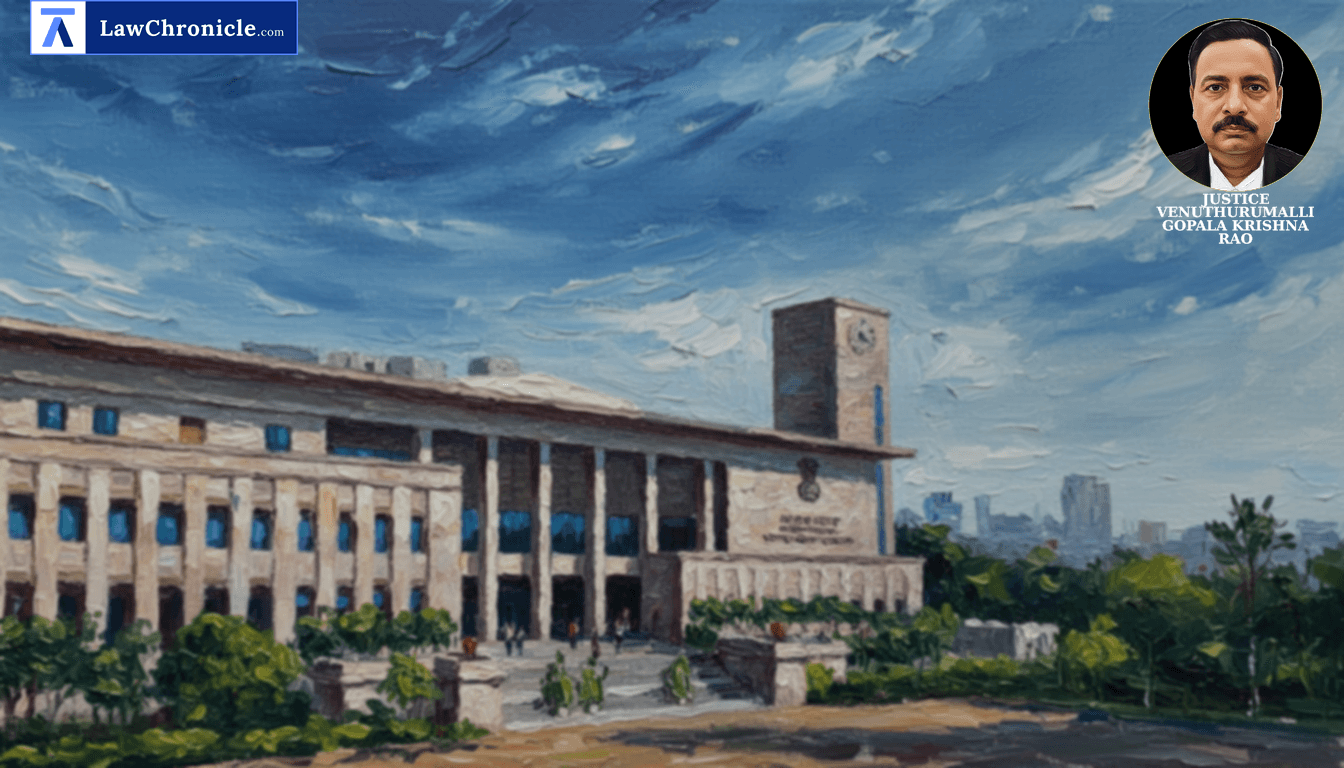
In a significant ruling, the High Court of Andhra Pradesh affirmed that a donor cannot unilaterally revoke a registered gift settlement deed through the Sub-Registrar after it has been accepted by the donee, declaring such cancellations as legally non-est.
Justice V. Gopala Krishna Rao, while presiding over a second appeal, clarified that once a gift is completed and accepted, it remains irrevocable except under the specific circumstances outlined in Section 126 of the Transfer of Property Act, 1882. The Court emphasized that a Sub-Registrar lacks the authority to entertain a cancellation deed for a previously registered gift settlement.
The Validity of Gift Deeds and Power of Sub-Registrars
The Court observed that the transfer of property via a registered gift deed creates a vested interest that cannot be undone at the mere will or pleasure of the donor. Relying on several precedents, the bench noted that even if the donor retains a life interest in the property, the vested remainder rights passed to the donee remain valid and binding.
In its reasoning, the Court observed: "Therefore, the law is very clear that when the donor executed a gift settlement deed duly registered before Sub-Registrar and the same is accepted by the donee and if the donor wants to cancel the said gift settlement deed, he has to approach the civil Court for cancellation of the gift settlement deed but not by way of execution of cancellation deed before the Sub-Registrar... Therefore, the original of Ex.A2-revocation deed is void and non-est."
Interpretation of Section 126 and the 2007 Senior Citizens Act
The appellant attempted to justify the revocation by arguing that the donee failed to maintain the donor. However, the Court found no such condition in the original gift deed. It also dismissed the applicability of the Maintenance and Welfare of Parents and Senior Citizens Act, 2007, as the gift deed in question was executed in 1989, long before the Act came into force.
Background:
The dispute involved a property measuring Ac. 2.25 cents. The plaintiff (Respondent No. 1) was the granddaughter of the first defendant's elder sister. In 1989, Defendant No. 1 executed a registered gift settlement deed in favor of the plaintiff, retaining life interest. However, in 1992, the donor unilaterally executed a revocation deed and subsequently sold the property to Defendant No. 2 (the Appellant) in 2005 via a registered sale deed.
The plaintiff filed a suit for declaration of title and recovery of possession. Both the Trial Court and the First Appellate Court ruled in favor of the plaintiff, prompting the second appeal. In its analysis, the High Court referred to Boodireddy Chandraiah Vs. Arigela Laxmi ( "(2007) 8 SCC 155": 2007 CaseBase(SC) 1143) regarding the limited scope of second appeals under Section 100 of the Code of Civil Procedure. It further relied on K.Bala Krishnan Vs. K.Kamalam to reiterate that completed gifts are irrevocable under Section 126 of the Transfer of Property Act, 1882. The Court specifically mentioned that the Full Bench decision in Yanala Malleshwari Vs. Smt. Ananthula Sayamma was overruled by the Supreme Court in Thota Ganga Laxmi and another Vs. Government of Andhra Pradesh and others, which established that unilateral cancellations of registered conveyances are void without a court declaration.
Further support was drawn from Satya Pal Anand Vs. State of Madhya Pradesh ( "(2015) 15 SCC 263": 2015 CaseBase(SC) 607) and Veena Singh (deceased) through L.Rs. Vs. District Registrar and another, which held that registration authorities do not possess the power to cancel registrations on substantive grounds once the document is registered. Consequently, the High Court dismissed the appeal, finding no substantial question of law.
Case Details:
Case No.: SECOND APPEAL No. 3 OF 2024
NeutralCitation: 2026:APHC:19342
Case Title: Kamma Naga Vasantha Rao v. Gottipati Anjana and others
Appearances:
For the Petitioner(s): Sri N.Phanindra Kumar represented by Sri S.V.S.S.Siva Ram
For the Respondent(s): Sri Ramineni Sudheer represented by Sri Ghanta Rama Rao, learned senior counsel
Source: 2026 CaseBase(AP) 172
 Breaking News